NeurIPS · 2016
RETAIN: An Interpretable Predictive Model for Healthcare using Reverse Time Attention Mechanism
Choi et al.
- The problem
- Doctors need risk predictions they can trust, but the most accurate deep learning models were black boxes that could not explain their reasoning.
- What we built
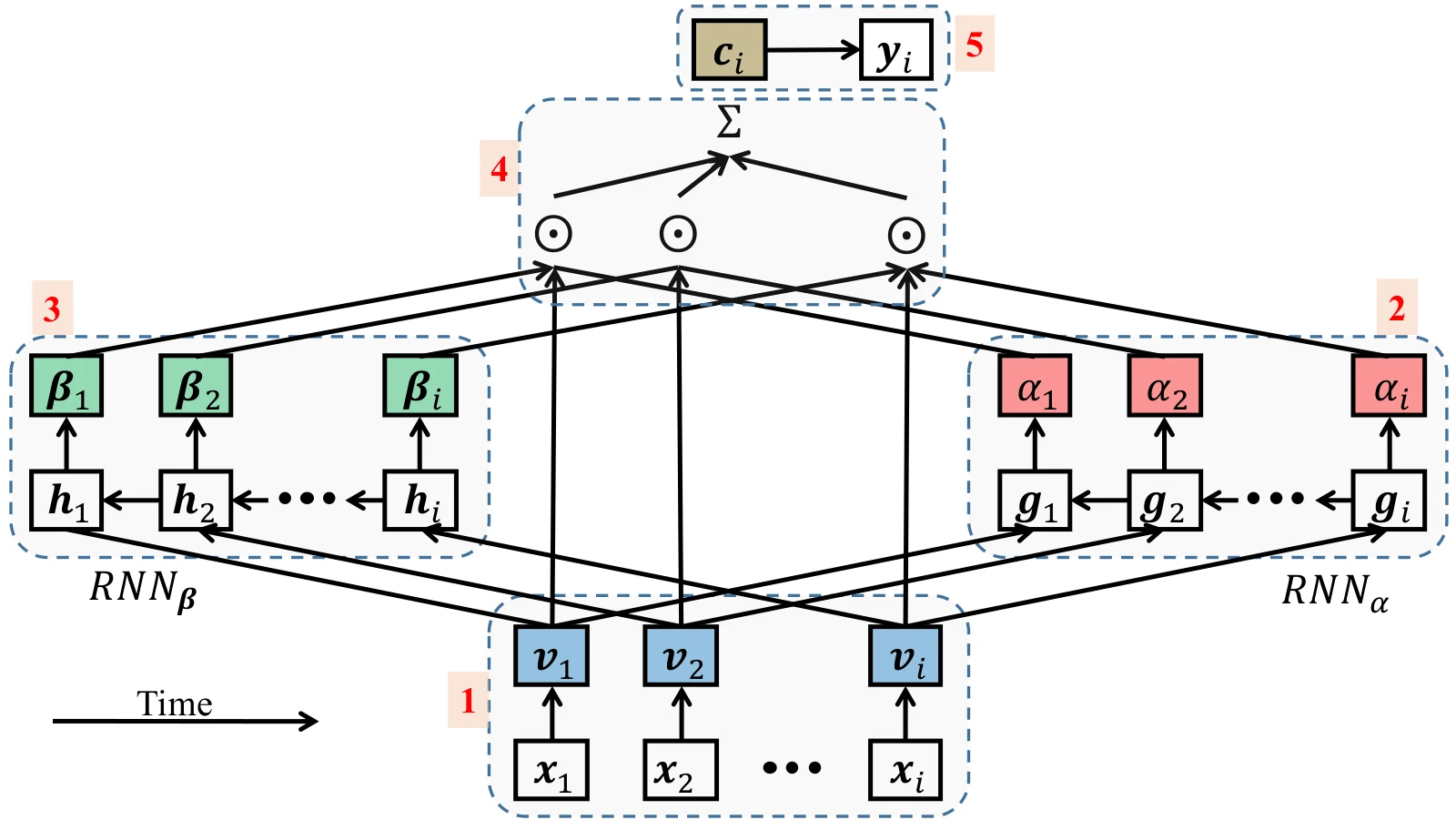
- A two-level attention model that reads a patient's visits in reverse time order, highlighting which past visits and diagnoses drove each prediction.
- Why it matters
- Tested on 14 million visits from 263K patients, its accuracy was comparable to RNNs while its interpretability was comparable to traditional models.